

Energy Price Cap Rises to £1,723 as Households Face Higher Costs This Autumn
The energy price cap increased by 4% from 1 October, with the annualised benchmark reaching £1,723 for a typical household paying by Direct Debit.
By Keep Updated UK Newsroom
Published:
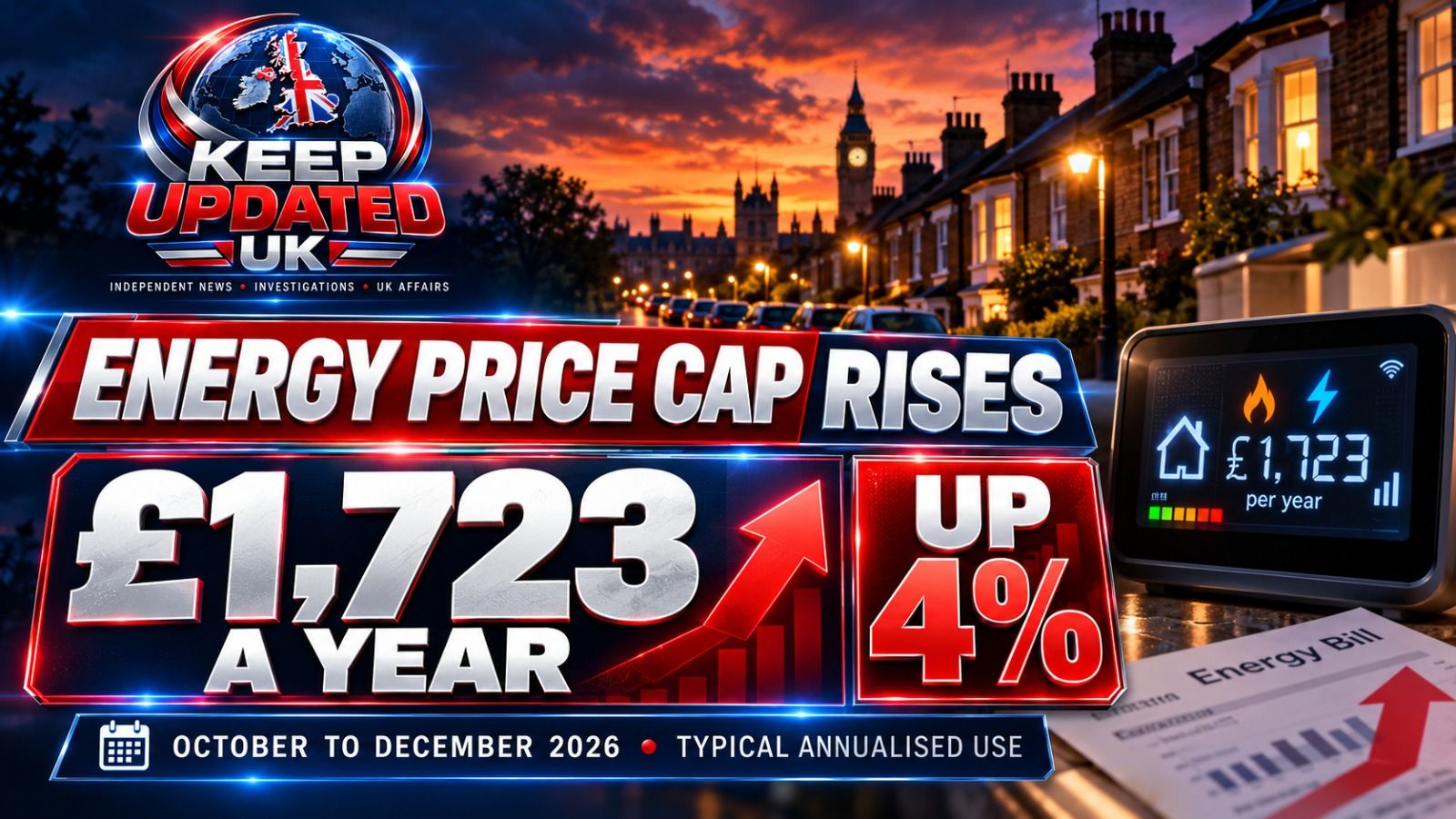
Households across England, Scotland and Wales are facing a higher energy price cap after new rates took effect on 1 October 2026.
Energy regulator Ofgem confirmed that the annualised benchmark for a typical household paying by Direct Debit would increase to £1,723 for the period from 1 October to 31 December.
The figure represents a 4% increase compared with the previous cap period.
However, the price cap is not a fixed limit on how much every household will pay.
Actual bills depend on energy consumption, tariff, payment method and location.
How much will gas and electricity cost?
Under Ofgem's published average Direct Debit figures, the electricity unit rate increased from 26.11 pence per kilowatt-hour to 26.32 pence.
The gas unit rate rose from 7.33 pence per kilowatt-hour to 7.97 pence.
The average electricity standing charge decreased from 57.19 pence a day to 54.83 pence.
The average gas standing charge rose from 29.04 pence to 29.68 pence per day.
Standing charges are fixed daily charges paid regardless of the amount of energy consumed.
These are average figures, and the actual rates available to households vary between regions and payment methods.
Ofgem also notes that VAT treatment has changed, with no VAT on electricity from 1 October 2026 to 31 March 2027. This means some comparisons with earlier periods require care.
Does the cap mean every household will pay £1,723?
No.
The £1,723 figure is an annualised illustration based on typical energy use, not a guarantee or maximum annual bill for an individual household.
A family using more gas or electricity than the benchmark household can pay more.
A household using less energy can pay less.
The cap restricts the unit rates and standing charges suppliers can charge customers on applicable default tariffs.
It does not place an absolute limit on total energy consumption or spending.
Why do standing charges matter?
Standing charges are particularly relevant to households attempting to reduce their energy usage.
Even if a customer uses very little electricity or gas, the daily standing charge generally remains payable while the supply is connected under the tariff.
This means reducing consumption may lower a bill without removing all charges.
The amount paid can also differ depending on where the property is located.
What about households on fixed tariffs?
Households on fixed-rate energy deals are not necessarily paying the same unit rates as customers covered by the default tariff cap.
A fixed tariff can have different prices and contractual conditions.
Consumers considering a change should compare their existing unit rates, standing charges and any applicable exit fees with alternative arrangements.
Why is this important heading into winter?
Energy consumption commonly increases during colder months as households use more heating and lighting.
Consequently, even where an annualised price cap changes by a relatively modest percentage, winter bills can be substantially higher than summer bills because of increased consumption.
Households concerned about affordability should review their actual tariff information and contact their energy supplier about available support.
The current price cap runs until 31 December 2026.
Keep Updated UK will continue covering energy prices, changes to the price cap and their effects on household finances.
Sources & Further Information
Related Stories

Energy Price Concerns Reach 72% of UK Businesses, New ONS Survey Finds
Almost three-quarters of businesses are worried about energy prices, according to new official figures, with hotels, restaurants and other hospitality businesses reporting the highest levels of concern.
Mortgage Lending Tightens as Bank of England Reports Weaker Homebuyer Demand
The Bank of England says mortgage credit availability fell in the latest quarter, while separate figures show approvals for house purchases dropped to 54,900 in August.
UK Inflation Rises to 3.1% as Higher Fuel Costs Put Pressure on Household Budgets
Inflation climbed from 2.9% to 3.1% in August, with motor fuel prices making the biggest contribution to the increase in the annual rate.