

Every Year of Delay to Parliament Restoration Could Add £320m–£420m, Watchdog Warns
Delaying major restoration of the Palace of Westminster could add hundreds of millions of pounds to the final bill each year, according to the National Audit Office.
By Keep Updated UK Newsdesk
Published:
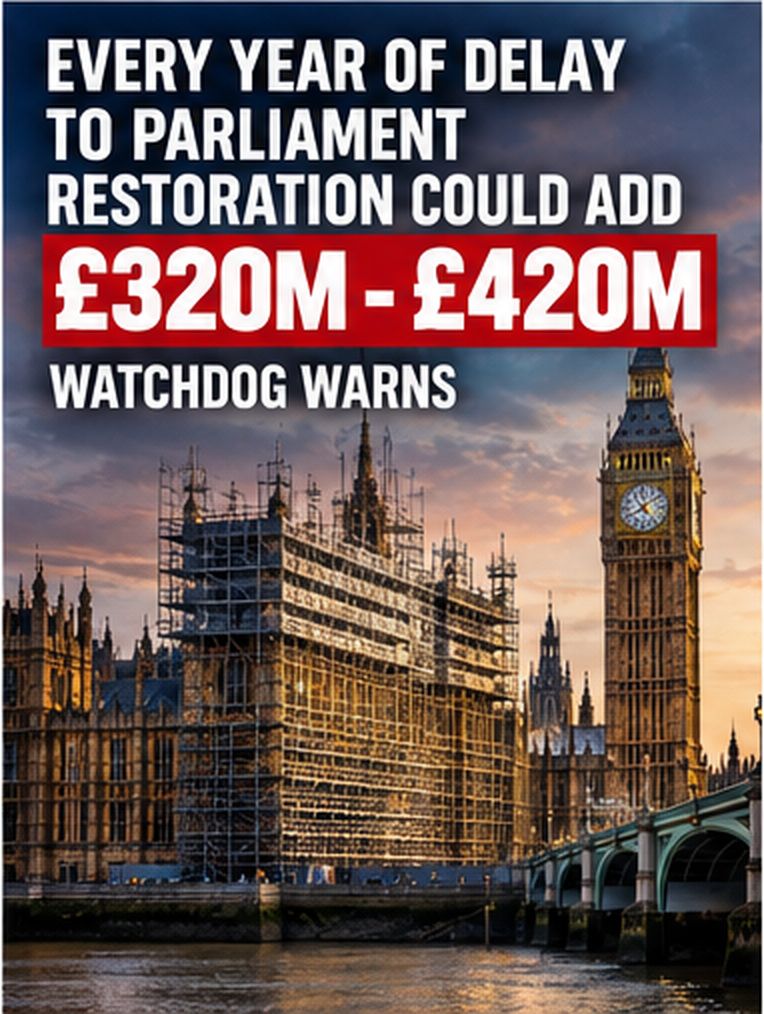
The deteriorating condition of the Houses of Parliament is creating an increasingly expensive challenge for taxpayers.
A National Audit Office assessment published in June 2026 found that each additional year of delay to the Palace of Westminster Restoration and Renewal Programme could add an estimated:
£320 million to £420 million to the overall cost.
The warning comes as Parliament considers how to proceed with one of Britain's most complicated public-building projects.
£3bn initial works proposal
A seven-year package of initial works capped at £3 billion has been proposed while longer-term restoration plans are developed.
The Palace faces problems including ageing mechanical and electrical systems, fire risks, asbestos and deterioration of its historic structure.
£1.5m every week on maintenance
Even before the main restoration begins, considerable sums are being spent keeping Parliament operating.
The NAO said Parliament currently spends around:
£1.5 million every week on maintenance and major refurbishment.
That is forecast to rise to approximately:
£2 million per week between 2026 and 2030.
At £2 million per week, the equivalent annual rate would be more than £100 million, although actual expenditure will depend on individual works and requirements.
Why would delays increase the bill?
Construction costs can rise with inflation, buildings can deteriorate further and additional temporary repairs may be needed.
Long delays can also affect suppliers' willingness to commit resources to a project, potentially reducing competition.
The NAO said there was no cost-free option.
Doing nothing would itself involve substantial spending and increasing operational risks.
The bigger bill remains uncertain
The £3 billion currently under consideration relates to the proposed first phase, not the entire long-term restoration.
Final costs will depend on which overall restoration approach Parliament ultimately selects, the extent to which MPs and peers remain in the building during construction and how long the programme takes.
For taxpayers, continued delays could therefore have a direct financial consequence even before full restoration begins.
Primary source: National Audit Office, Restoration and Renewal of the Palace of Westminster: 2026 Update.