

UK Job Vacancies Fall to 702,000 as Labour Market Shows Signs of Weakness
Job vacancies declined to an estimated 702,000 in the three months to August, while unemployment remained at 4.9% in the latest Labour Force Survey figures.
By Keep Updated UK Newsroom
Published:

The number of job vacancies across the United Kingdom fell to an estimated 702,000 in the three months from June to August 2026, according to the latest Office for National Statistics figures.
The total represented a reduction of approximately 8,000 vacancies compared with the previous three-month period.
It was also the lowest estimated vacancy level since February to April 2021.
The figures provide evidence of a labour market in which the number of available job opportunities has declined over the longer term.
However, statisticians advise caution when interpreting small short-term movements in vacancy estimates.
Vacancies decline compared with last year
The ONS reported that estimated vacancies were 36,000 lower than a year earlier, representing an annual decrease of 4.9%.
The latest total was also approximately 86,000 below the level recorded immediately before the coronavirus pandemic.
This longer-term comparison suggests that recruitment conditions have become less favourable for jobseekers than during periods of stronger labour demand.
Nevertheless, not every industry or region experiences the same conditions.
Employers in some sectors may continue to experience recruitment difficulties even when national vacancy numbers are lower.
Unemployment remains at 4.9%
Separate ONS employment figures placed the UK unemployment rate at 4.9% for May to July 2026.
That rate was broadly unchanged compared with the previous quarter, although it was 0.2 percentage points higher than a year earlier.
The estimated employment rate for people aged 16 to 64 stood at 75.1%.
The figures illustrate why vacancy statistics and unemployment rates should be examined together.
Vacancies provide information about unfilled positions, while unemployment measures people without work who are available for and seeking employment under the survey definition.
Neither measure alone captures every aspect of labour market conditions.
More people competing for available vacancies
The ONS estimated that there were 2.5 unemployed people for every vacancy in May to July 2026.
That compared with 2.3 during the equivalent period a year earlier.
An increase in this ratio can indicate that the labour market has become less tight, with more unemployed people relative to available positions.
This does not mean that every vacancy receives several suitable applicants.
Skills, qualifications, pay, working hours and location can all affect whether a particular job is accessible to an individual candidate.
What do payroll figures show?
Administrative data from HM Revenue and Customs provide another perspective.
Early estimates indicated approximately 30.2 million payrolled employees in August 2026.
The provisional total was 26,000 lower than in July and 145,000 lower than a year earlier.
These early payroll figures are subject to revision as further employer submissions become available.
The ONS recommends assessing labour market developments using several indicators rather than relying on one dataset.
What does this mean for jobseekers?
A less active recruitment market can make it more challenging for jobseekers to find suitable employment.
However, the headline statistics do not demonstrate that hiring has stopped or that every sector is reducing its workforce.
The ONS also notes that the estimated quarterly decline of 8,000 vacancies falls within the statistical uncertainty associated with the survey.
The broader annual decline is therefore more informative than the relatively small quarterly change.
What happens next?
The next official UK labour market figures are scheduled for 20 October 2026.
These will provide updated evidence on employment, unemployment, earnings and job vacancies.
For households, workers and businesses, the labour market remains an important indicator of the wider economy because it influences income, consumer spending and business confidence.
Keep Updated UK will continue examining changes to employment, wages and the availability of jobs across Britain.
Sources & Further Information
- Office for National Statistics — Vacancies and jobs in the UK: September 2026, published 15 September 2026Office for National Statistics · Official document(opens in a new tab)
- Office for National Statistics — Employment in the UK: September 2026, published 15 September 2026Office for National Statistics · Official document(opens in a new tab)
Related Stories

Energy Price Concerns Reach 72% of UK Businesses, New ONS Survey Finds
Almost three-quarters of businesses are worried about energy prices, according to new official figures, with hotels, restaurants and other hospitality businesses reporting the highest levels of concern.
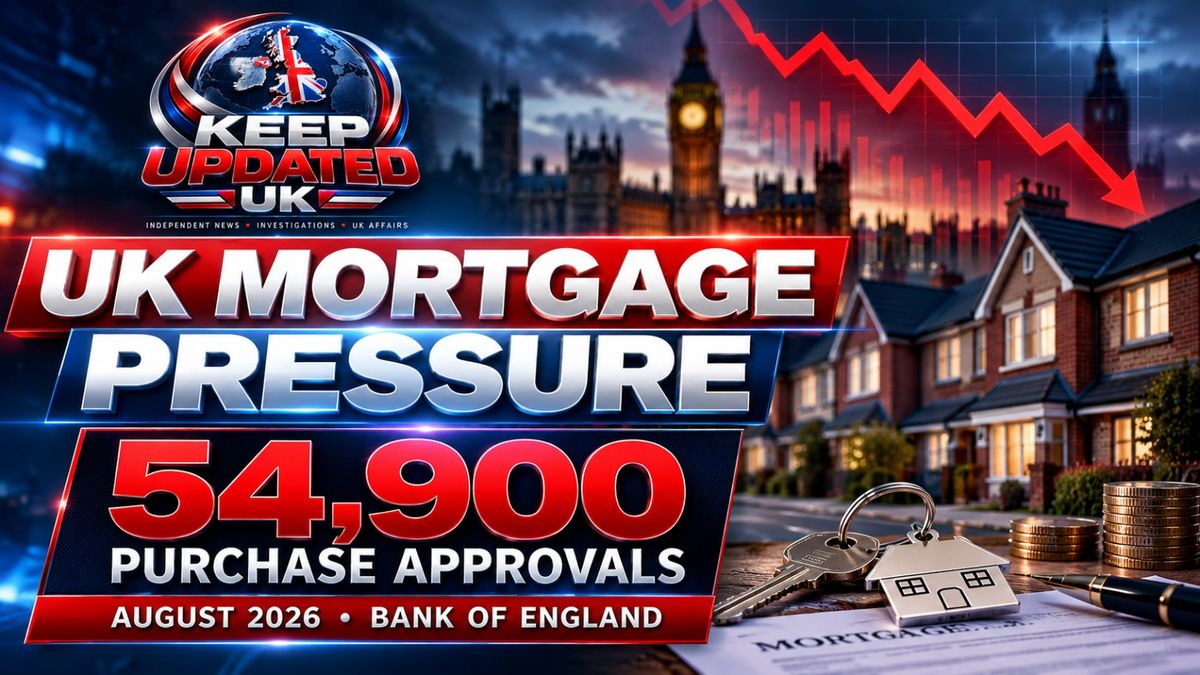
Mortgage Lending Tightens as Bank of England Reports Weaker Homebuyer Demand
The Bank of England says mortgage credit availability fell in the latest quarter, while separate figures show approvals for house purchases dropped to 54,900 in August.
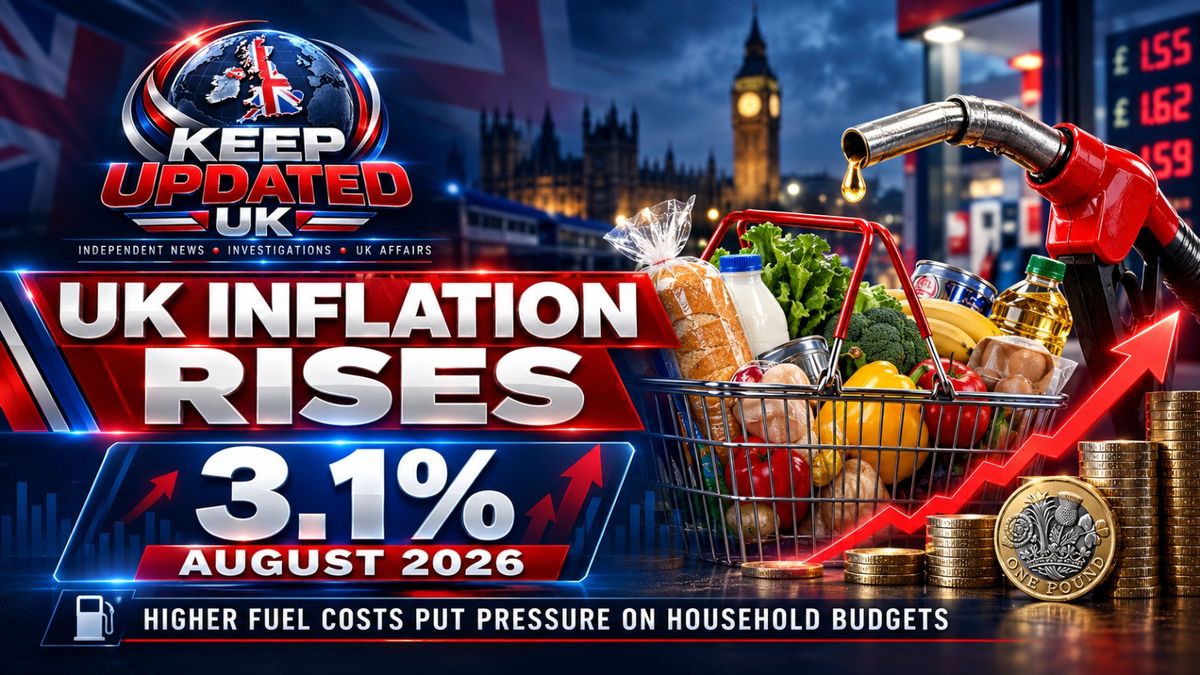
UK Inflation Rises to 3.1% as Higher Fuel Costs Put Pressure on Household Budgets
Inflation climbed from 2.9% to 3.1% in August, with motor fuel prices making the biggest contribution to the increase in the annual rate.