

Petrol and Diesel Prices Now Available on Google Maps Under Government Scheme
Motorists across the UK can now compare petrol and diesel prices directly through Google Maps following the expansion of a government-backed fuel price transparency scheme.
By Keep Updated UK Newsdesk
Published:
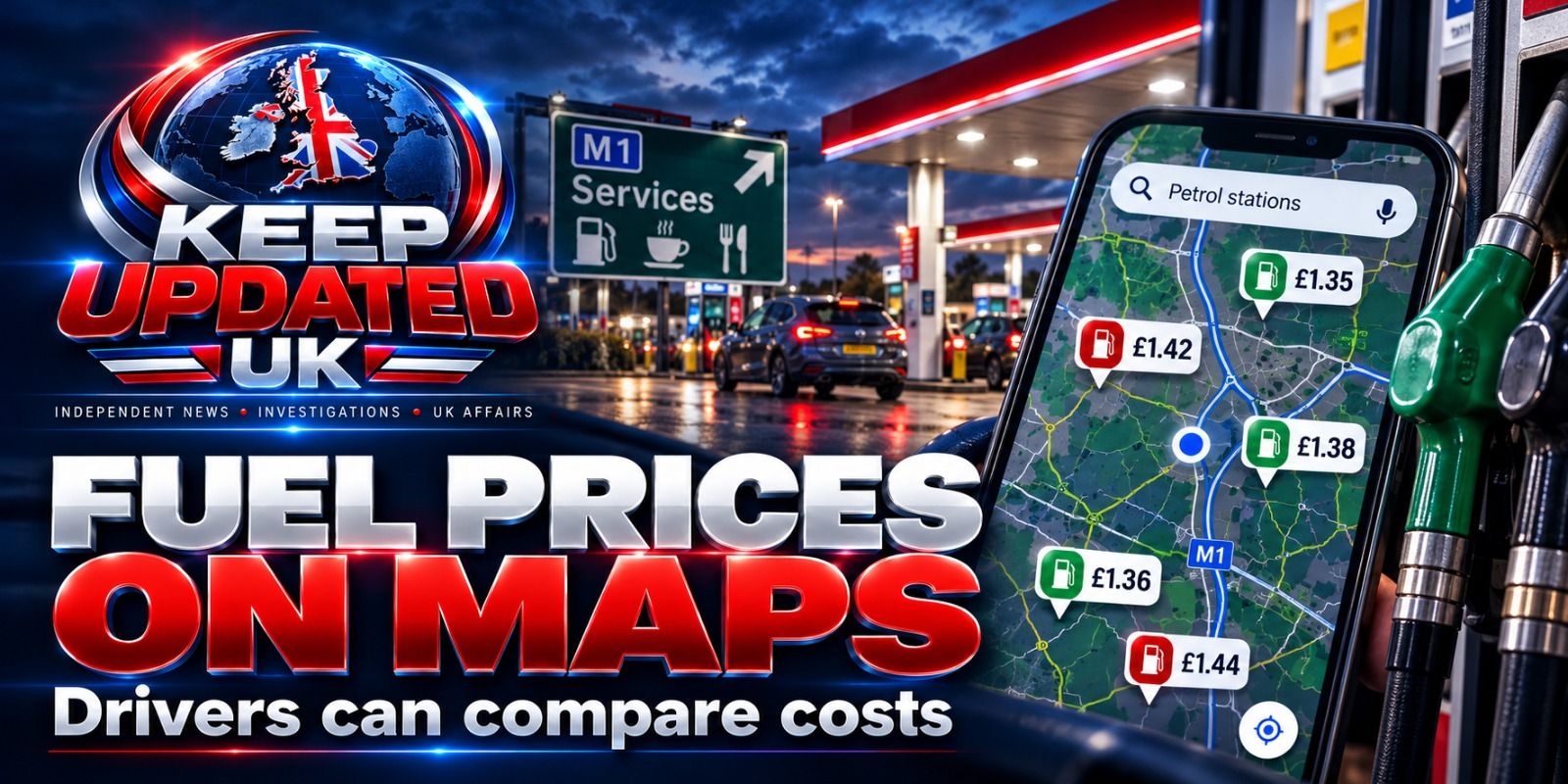
Petrol and diesel prices are now available through Google Maps in the UK, with the new feature introduced on Thursday 8 October 2026.
The information comes from Fuel Finder, a national system requiring petrol retailers to report their prices.
The Government says the changes will help motorists compare nearby filling stations and identify cheaper fuel without having to visit multiple forecourts.
How does Fuel Finder work?
Fuel Finder is designed to improve transparency in the petrol retail market.
Since February 2026, petrol stations have been required to report price changes within 30 minutes.
The resulting data can be used by approved services and applications to show motorists the prices being charged at different locations.
The Government says the system now reflects approximately 99% of fuel sold on UK roads.
The addition of Google Maps makes the information available through a service already used by millions of drivers.
How can drivers compare prices?
Motorists can open Google Maps, search for nearby petrol stations and look for available fuel price information.
Where prices are shown, drivers can compare different forecourts before deciding where to fill up.
The information is designed to be near real-time, although that does not guarantee every price will be identical to the price displayed at the pump at every moment.
Drivers should check the current advertised price when they arrive.
How much money could households save?
The Government estimates that comparing petrol and diesel prices could save households with a car around £40 annually.
This is an estimate rather than a guaranteed saving for every driver.
Actual savings depend on several factors, including the quantity of fuel purchased, local price differences and whether drivers can conveniently access cheaper stations.
For some households, the difference could be relatively small.
Others who drive regularly and live near several competing petrol stations may have more opportunities to save.
Why has the Government introduced the scheme?
Fuel pricing has attracted scrutiny over the relationship between wholesale costs and the prices paid by consumers.
The Competition and Markets Authority previously recommended greater transparency in fuel retailing.
By making price information more accessible, the system aims to encourage competition between retailers.
The expectation is that better-informed motorists will be able to choose lower-priced forecourts, creating an incentive for retailers to offer competitive prices.
Will petrol prices actually fall?
Fuel Finder does not directly set petrol or diesel prices.
Retailers remain responsible for determining their own prices, while global oil markets, taxation, transport costs and competition continue to influence how much motorists pay.
The scheme may help drivers identify lower prices, but it cannot guarantee that average fuel prices will fall.
Why this matters
Fuel remains a significant household and business expense, particularly for people who commute long distances or live in areas with limited public transport.
More accessible price information gives drivers an additional way to compare costs.
The Government's savings claims will ultimately need to be judged against motorists' real experiences.
Keep Updated UK will continue examining fuel prices, taxation and the cost of motoring across Britain.
Sources & Further Information
Related Stories

Government Publishes New Immigration and Asylum Bill Details: What Could Change?
The Home Office has released detailed information about proposed changes to the UK's immigration and asylum system, including reforms to appeals, human rights claims and financial support for asylum seekers.

UK Announces 38 New Russia Sanctions Targeting Oil, Ships and Financial Networks
The British Government has announced another package of sanctions aimed at restricting Russia's oil revenues, military supply chains and access to international financial networks.
Government Accepts 44 Recommendations for Regulating AI in UK Healthcare
The Government has backed a new approach to regulating artificial intelligence in healthcare, promising stronger monitoring of AI medical technologies as they are developed and used.