

Two Sussex officers dismissed over excessive force against 92-year-old care-home resident
A disciplinary panel found gross misconduct following an incident involving a Taser, spray and baton against an elderly wheelchair user in 2022.
By Keep Updated UK Newsroom
Published:

Gross misconduct findings
Two Sussex Police officers have been dismissed without notice after a disciplinary hearing found they used excessive force against an elderly disabled man at a care home in St Leonards-on-Sea.
PC Stephen Smith and PC Rachel Comotto will also be placed on the police barred list following the conclusion of proceedings on 6 October 2026. The case followed an Independent Office for Police Conduct investigation into an incident involving Donald Burgess, who was 92 at the time.
What happened at the care home
Police attended the home on 21 June 2022 after a report that a resident had a knife and was threatening staff. According to the IOPC, Mr Burgess was a wheelchair user with an amputated leg, isolated in a room and holding a cutlery knife when officers entered.
Within about 90 seconds, force was used: PAVA spray, a baton strike and a Taser. Mr Burgess was handcuffed and taken to hospital. He died on 13 July 2022. A pathologist determined that the officers' actions did not cause or contribute to his death.
Panel decision and criminal acquittals
The disciplinary panel found both officers breached professional standards involving use of force, discreditable conduct and authority, respect and courtesy. A further allegation concerning an inappropriate social-media comment by PC Comotto was also proven.
The officers had been acquitted in May 2025 of criminal charges of assault occasioning actual bodily harm. A criminal acquittal and a professional misconduct finding use different legal tests; the later dismissal does not overturn their acquittals.
Why the watchdog criticised the response
The IOPC said the circumstances allowed opportunities for de-escalation and that the force used was unreasonable. The findings raise wider questions about how officers assess risks involving vulnerable people, particularly where disability or cognitive impairment is relevant.
For Mr Burgess's family, the hearing represents an accountability decision several years after the original incident. Accurate coverage must also preserve the documented distinction between the officers' use of force and the separate medical cause of his death.
Sources & Further Information
Related Stories

Two men arrested after suspected breach at RAF Molesworth in Cambridgeshire
Counter-terrorism detectives are investigating after two men were found inside the perimeter of RAF Molesworth following the discovery of a damaged fence.
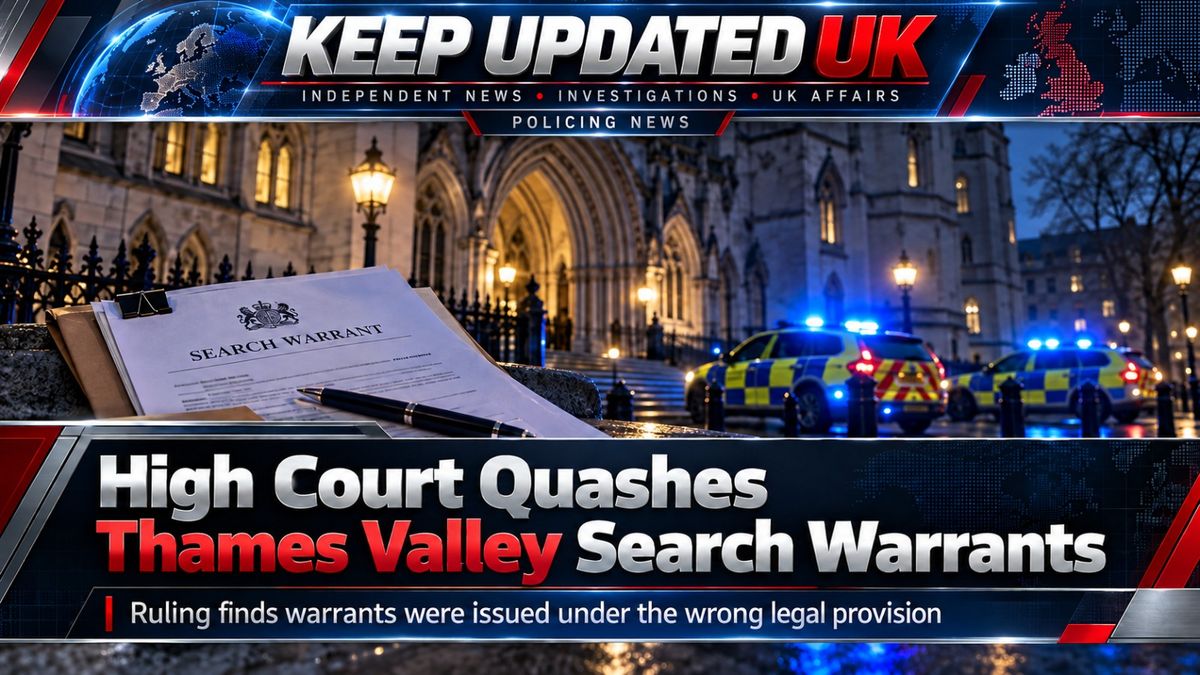
High Court quashes warrants used in Andrew Mountbatten-Windsor police searches
Thames Valley Police has accepted that warrants used to search two properties were obtained under the wrong legal provision, while its investigation continues.

Serving Royal Navy member accused of offences involving protected information
Counter-terrorism investigators have charged a 24-year-old serving Royal Navy member over alleged conduct involving sensitive information.